 EN
EN

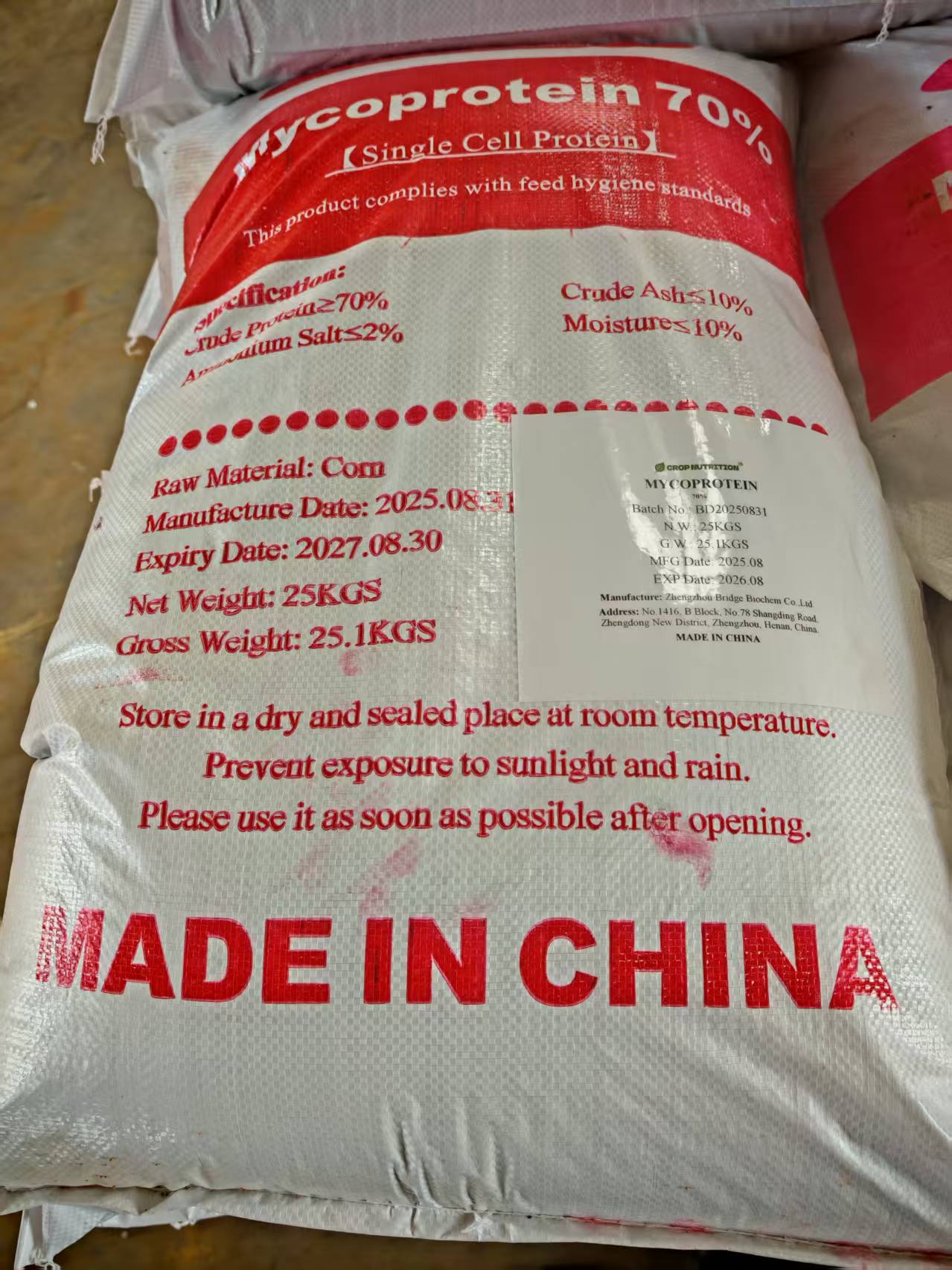
Mycoprotein’s Superior Resource Efficiency Compared to Conventional Feed Proteins
Feed Conversion Ratio Advantage: Mycoprotein (FCR <1.1) vs. Fishmeal (1.5–2.0) and Soy (1.8–2.2)
Feed conversion ratio (FCR) measures how efficiently an animal converts feed mass into body mass — a lower FCR means less feed is needed per unit of growth, reducing both resource use and operational costs. Mycoprotein, a protein-rich ingredient derived from filamentous fungi via controlled fermentation, achieves an FCR of under 1.1, significantly outperforming conventional feed proteins. In contrast, fishmeal typically ranges from 1.5 to 2.0, and soybean meal from 1.8 to 2.2.
| Protein Source | Typical FCR Range |
|---|---|
| Mycoprotein | <1.1 |
| Fishmeal | 1.5–2.0 |
| Soybean meal | 1.8–2.2 |
This efficiency stems from mycoprotein’s high digestibility and balanced amino acid profile — traits that support optimal nutrient absorption and metabolic utilization in animals. Unlike crop- or fish-derived proteins, mycoprotein’s FCR is unaffected by seasonal variability, droughts, or overfishing, enabling consistent, predictable performance year-round. As a result, feed manufacturers can meet protein efficiency targets with far less raw material — cutting input costs while easing pressure on marine ecosystems and agricultural land.
Land and Water Savings: 95% Less Arable Land and 88% Less Blue Water Than Soybean Meal
Mycoprotein production delivers dramatic reductions in land and water use compared to soybean meal. Lifecycle assessments show it requires 95% less arable land and 88% less blue water, primarily because fungal fermentation occurs in compact, climate-controlled bioreactors — eliminating dependence on soil, rainfall, or large-scale irrigation. In contrast, soy cultivation drives deforestation in ecologically sensitive regions and consumes vast volumes of freshwater for irrigation. Mycoprotein facilities further enhance water efficiency through internal process-water recycling, minimizing freshwater withdrawal.
A single industrial-scale bioreactor can produce protein equivalent to thousands of hectares of soy farmland — without associated nutrient runoff, soil degradation, or pesticide leaching. This decoupling from land and water constraints makes mycoprotein especially valuable in water-scarce or land-limited regions. For feed producers, switching to mycoprotein reduces environmental footprint, lessens reliance on imported soy, and strengthens the sustainability credentials of aquaculture and livestock systems.
Lower Environmental Impact: Carbon Footprint and Lifecycle Assessment Evidence
Lifecycle assessment (LCA) quantifies the full environmental footprint of protein sources — from raw material extraction to factory gate. LCAs consistently position mycoprotein as a low-impact alternative to conventional plant- and marine-based proteins.
70% Lower GHG Emissions vs. Soybean Meal (2.1 vs. 7.3 kg CO₂-eq/kg protein)
A peer-reviewed 2023 cradle-to-factory-gate LCA found mycoprotein’s carbon footprint is just 2.1 kg CO₂-equivalent per kilogram of protein, compared to 7.3 kg CO₂-eq/kg for conventional soybean meal — a 70% reduction. Key drivers include its sub-1.1 FCR, which slashes demand for carbon-intensive inputs, and the absence of agricultural emissions such as nitrous oxide from fertilizer use or diesel from mechanized farming. Fermentation occurs in sealed bioreactors, enabling co-location with renewable energy infrastructure and reducing transport-related emissions. When scaled across global feed demand, even modest substitution of soy with mycoprotein could avoid tens of millions of tonnes of CO₂e annually — supporting science-based climate targets and lowering the carbon intensity of animal nutrition.
Reduced Eutrophication and Biodiversity Pressure from Eliminating Deforestation-Linked Inputs
Mycoprotein avoids the eutrophication and biodiversity loss tied to industrial soy production. A 2022 comparative LCA showed its eutrophication potential is 85% lower than soybean meal, as fermentation eliminates the need for synthetic fertilizers, pesticides, and agricultural land — all major contributors to nutrient runoff, algal blooms, and aquatic dead zones. By removing the land-use component entirely, mycoprotein relieves pressure on forests, savannas, and wetlands, helping preserve critical habitats and ecosystem services. Its production also carries no ecotoxicological risk to pollinators or soil organisms — a key advantage over intensive soy monocultures. These benefits align directly with zero-deforestation commitments and strengthen mycoprotein’s role in building resilient, nature-positive supply chains.
Circular Economy Integration: Mycoprotein Production from Waste Streams
Fermentation of Fusarium venenatum Using Food Processing Byproducts (e.g., Starch Hydrolysates, Molasses)
The filamentous fungus Fusarium venenatum is uniquely suited to circular production: it efficiently converts low-value food processing residues — including starch hydrolysates from potato or corn processing and molasses from sugar refining — into high-quality mycoprotein. Its robust enzyme system (amylases, proteases, lipases) breaks down complex carbohydrates, proteins, and lipids in these streams, enabling rapid biomass accumulation during submerged fermentation. This closed-loop approach transforms waste that would otherwise be landfilled or incinerated into a nutrient-dense, scalable feed ingredient. A 2025 review confirmed that fermentation on agro-industrial sidestreams yields mycoprotein with a complete, bioavailable amino acid profile suitable for aquaculture and livestock diets — embodying core circular economy principles.
EU Aquafeed Trials (2022–2023): Mycoprotein Scaling with Waste-Derived Feedstock
Pilot trials across Europe (2022–2023) validated the commercial viability of waste-fed mycoprotein in aquafeed. Using a blend of starch hydrolysates, molasses, and other pre-consumer food byproducts, facilities fermented Fusarium venenatum at pilot scale and produced protein concentrates that successfully replaced significant portions of fishmeal in salmon and trout diets — with no compromise to growth performance or feed conversion. LCAs confirmed substantial reductions in land use, blue water consumption, and eutrophication potential versus conventional soy or fishmeal. Critically, the trials demonstrated dual value creation: reducing reliance on wild-caught fish and diverting unavoidable food-processing waste from disposal. These results have accelerated plans for larger-scale, commercially integrated production — reinforcing mycoprotein’s foundational role in a circular bioeconomy for animal feed.
Balancing Sustainability Gains with Energy Use in Industrial Fermentation
Industrial fermentation does require energy — primarily for aeration, mixing, and temperature control. A 2023 LCA estimated electricity use at approximately 10 MJ per kilogram of mycoprotein, comparable to or lower than the 15–20 MJ/kg required for fishmeal processing. Importantly, this energy demand is increasingly met through renewable sources, and innovations like continuous fermentation and waste-heat recovery are further improving efficiency. Crucially, even when accounting for energy inputs, mycoprotein maintains a 70% lower carbon footprint than soybean meal, while eliminating deforestation-linked land use and agricultural runoff. The net sustainability advantage remains unequivocal: energy use is a manageable factor — not a trade-off — in mycoprotein’s broader environmental benefit profile.
Frequently Asked Questions (FAQs)
What is mycoprotein and how is it produced?
Mycoprotein is a protein-rich ingredient derived from filamentous fungi, typically produced through controlled fermentation processes using food processing residues as feedstock.
How does mycoprotein achieve a low feed conversion ratio (FCR)?
Mycoprotein’s high digestibility and balanced amino acid profile promote efficient nutrient absorption and utilization, resulting in an FCR of under 1.1 — far superior to fishmeal and soybean meal.
Why is mycoprotein more sustainable than traditional feed proteins?
Mycoprotein requires significantly less land and water, produces lower greenhouse gas emissions, and avoids the environmental damage associated with deforestation, nutrient runoff, and overfishing.
Does mycoprotein require significant energy resources for production?
While industrial fermentation is energy-intensive, energy inputs for mycoprotein production are increasingly sourced from renewables, keeping its carbon footprint far lower than traditional protein sources like soybean meal.
What role does mycoprotein play in a circular economy?
Mycoprotein is produced from waste streams such as starch hydrolysates and molasses, transforming low-value residues into scalable, high-quality feed ingredients and embodying circular economy principles.
Table of Contents
- Mycoprotein’s Superior Resource Efficiency Compared to Conventional Feed Proteins
- Lower Environmental Impact: Carbon Footprint and Lifecycle Assessment Evidence
- Circular Economy Integration: Mycoprotein Production from Waste Streams
- Balancing Sustainability Gains with Energy Use in Industrial Fermentation
-
Frequently Asked Questions (FAQs)
- What is mycoprotein and how is it produced?
- How does mycoprotein achieve a low feed conversion ratio (FCR)?
- Why is mycoprotein more sustainable than traditional feed proteins?
- Does mycoprotein require significant energy resources for production?
- What role does mycoprotein play in a circular economy?