 EN
EN

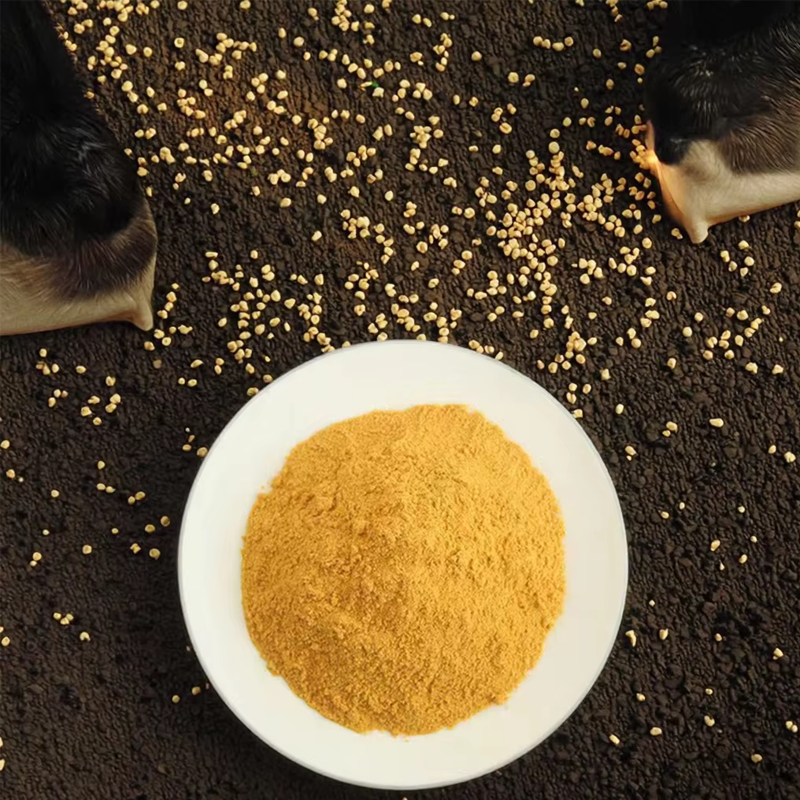
High Crude Protein Content (60%) and Its Impact on Animal Growth Performance
Metabolisable and Rumen-Undegradable Protein Profile Supporting Consistent Muscle Development
Corn gluten meal (CGM), with 60% crude protein, provides a highly concentrated source of metabolisable energy and a distinctive rumen-undegradable protein (RUP) fraction—approximately 60% of its protein bypasses rumen degradation. This high RUP value delivers essential amino acids—particularly methionine and leucine—steadily to the small intestine, supporting sustained muscle protein synthesis. A 2022 comparative analysis of protein sources for ruminants confirmed that ingredients with an RUP fraction above 55% promote more uniform daily gain in growing cattle. Unlike highly soluble proteins, CGM avoids postprandial amino acid spikes, reducing nitrogen loss and improving nitrogen retention. This consistent supply is especially valuable for finishing beef cattle and dairy heifers, where steady muscle deposition directly improves carcass leanness and feed-to-gain ratios. Its high metabolisable energy content further spares dietary protein from oxidation, directing it toward accretion and reinforcing robust, efficient muscle development.
Broiler and Swine Trial Evidence: 5.2% Higher Weight Gain and Improved Feed Conversion with 60% Corn Gluten Meal
Controlled trials demonstrate consistent performance benefits across species. In a 2023 broiler study, diets containing 60% CGM—replacing part of the soybean meal—yielded a 5.2% higher body weight at 42 days and a 3.6% improvement in feed conversion ratio (FCR). These gains were linked to CGM’s balanced methionine profile and high apparent metabolisable energy, which reduced feed required per unit of gain. Similarly, a swine trial with weaned piglets showed a 4.8% increase in average daily gain and a 2.9% better FCR when CGM replaced 15% of soybean meal protein. These outcomes reflect CGM’s high digestibility and targeted amino acid contribution—especially methionine, often the first-limiting amino acid in maize-soybean diets. The cross-species consistency underscores CGM’s reliability as a functional protein source for rapid, efficient growth without excessive reliance on synthetic amino acid supplementation.
Digestibility, Amino Acid Balance, and Species-Specific Nutrient Utilization of Corn Gluten Meal
Methionine-Rich Profile Enhances Bioavailability in Poultry and Ruminants—But Lysine Limitation Requires Strategic Supplementation
CGM stands out for its high methionine content—a sulfur-containing amino acid critical for feather development in poultry and lean muscle growth in ruminants. Its substantial RUP fraction ensures much of this methionine escapes ruminal degradation and is absorbed intact in the small intestine, significantly enhancing bioavailability in cattle and sheep. This supports efficient protein synthesis and reduces dependence on synthetic methionine. However, CGM is markedly deficient in lysine—the first-limiting amino acid for both swine and poultry. Unaddressed, this shortfall can constrain growth and feed efficiency. Nutritionists therefore routinely pair CGM with lysine-rich ingredients like soybean meal or supplement with synthetic L-lysine HCl. Optimising the methionine-to-lysine ratio ensures CGM’s digestive and metabolic advantages are fully leveraged without compromising performance.
Corn Gluten Meal’s Role in Optimizing Feed Efficiency Across Livestock and Aquaculture
Shrimp and Tilapia Feeds: 12–18% Inclusion Maximizes FCR Reduction Without Compromising Growth
As a co-product of corn wet-milling, CGM offers a cost-effective, sustainable protein alternative in aquafeeds. Research shows inclusion at 12–18% in shrimp and tilapia diets improves feed conversion ratio (FCR) by enhancing nutrient digestibility and amino acid absorption. A 2022 study published in Aquaculture Nutrition found juvenile tilapia fed 15% CGM achieved a 5% improvement in FCR versus a fishmeal-based control—without any reduction in growth rate. Its high methionine supports muscle development, while lysine deficiency is readily mitigated with synthetic supplementation. CGM also contributes to pellet integrity and palatability, ensuring consistent intake. By partially replacing traditional protein sources, it lowers feed costs by up to 10% and reduces nitrogen discharge—supporting both economic efficiency and water quality. The 12–18% inclusion range represents the optimal balance: higher levels risk amino acid imbalances, while lower ones underutilise CGM’s functional and economic potential.
Economic and Functional Advantages of Corn Gluten Meal vs. Soybean Meal and Fishmeal
Cost-Effective Partial Replacement: 9–14% Feed Cost Savings in Aquafeeds While Maintaining Growth Metrics
CGM delivers a compelling economic advantage as a partial substitute for costly fishmeal and soybean meal in aquafeed formulations. With ≥60% crude protein and strong digestibility, it enables raw material cost reductions of 9–14% without sacrificing growth performance. Its status as a corn milling co-product—rather than a primary commodity—makes it significantly more affordable than imported fishmeal or soy protein concentrates. Practical trials confirm that replacing up to 15% of fishmeal with CGM in tilapia and shrimp diets maintains weight gain and FCR, validating its biological equivalence at scale. Beyond cost, CGM contributes functional benefits: its natural binding properties improve pellet durability and reduce nutrient leaching during water immersion, further boosting feed efficiency. By integrating CGM strategically, producers achieve economically sustainable, high-performing feeds aligned with both production goals and environmental stewardship.
FAQ Section
What is the crude protein content of corn gluten meal?
Corn gluten meal contains 60% crude protein, making it an excellent source of concentrated protein for various animal diets.
How does the RUP fraction in CGM benefit ruminants?
The RUP fraction in CGM ensures that approximately 60% of its protein bypasses rumen degradation, delivering essential amino acids directly to the small intestine for muscle synthesis.
Is methionine content in CGM beneficial for poultry and ruminants?
Yes, CGM’s high methionine content enhances feather development in poultry and supports lean muscle growth in ruminants.
What is the recommended inclusion rate for CGM in aquafeeds?
The optimal inclusion range for CGM in aquafeeds, such as shrimp and tilapia diets, is 12–18% to achieve maximum feed efficiency without compromising growth.
Are there cost benefits to using CGM in feed formulations?
Yes, replacing fishmeal or soybean meal with CGM can reduce feed costs by 9–14% while maintaining growth performance across livestock and aquaculture.
Table of Contents
- High Crude Protein Content (60%) and Its Impact on Animal Growth Performance
- Digestibility, Amino Acid Balance, and Species-Specific Nutrient Utilization of Corn Gluten Meal
- Corn Gluten Meal’s Role in Optimizing Feed Efficiency Across Livestock and Aquaculture
- Economic and Functional Advantages of Corn Gluten Meal vs. Soybean Meal and Fishmeal
- FAQ Section