 EN
EN

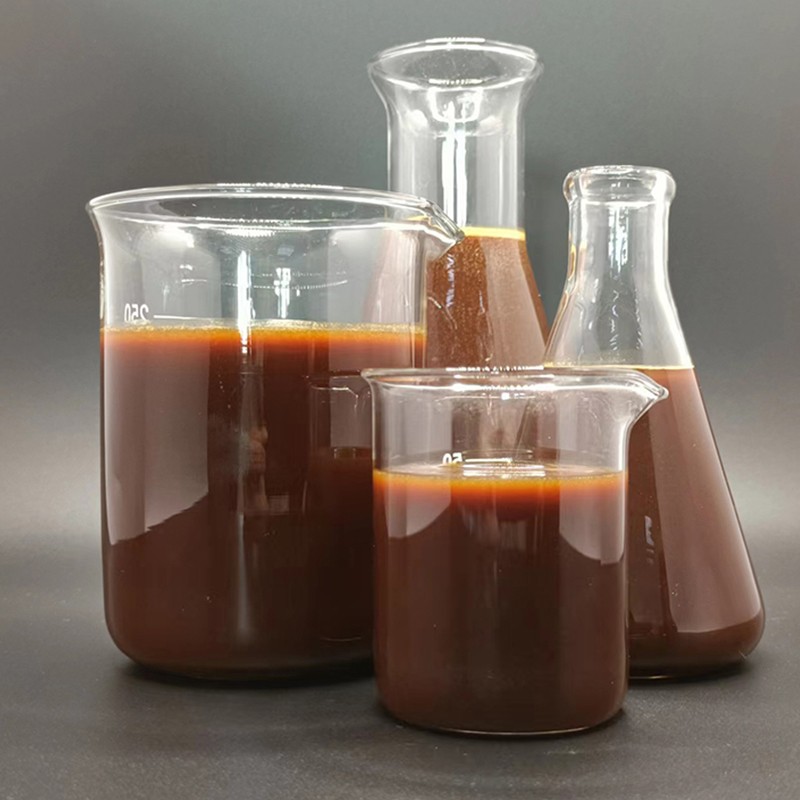
What Is Corn Hydrolysate 42%? Biochemical Properties and Agronomic Benefits
Amino acid profile, free peptides, and phyto-stimulatory compounds in corn hydrolysate 42%
Corn hydrolysate 42% is a concentrated biostimulant derived from corn protein via enzymatic hydrolysis—breaking down complex proteins into highly bioavailable free amino acids and short-chain peptides. This 42% concentration reflects a high-density formulation rich in physiologically active compounds, including glutamic acid, proline, and glycine. Its efficacy arises from a dual functional role: free amino acids serve as an immediate, low-energy nitrogen source, while soluble peptides act as signaling molecules that upregulate nutrient assimilation pathways. Internal analysis by a leading global manufacturer confirms >90% bioavailability—meaning nitrogen and carbon skeletons are absorbed and translocated within hours, bypassing energy-intensive soil mineralization required by granular fertilizers. This rapid integration is enhanced by phyto-stimulatory bioactive peptides that mimic natural plant hormones, promoting root proliferation and chlorophyll biosynthesis. Unlike synthetic nitrogen sources that risk osmotic stress, corn hydrolysate 42% delivers a balanced, gentle, and sustained nutritional boost—making it foundational to precision agriculture programs aimed at unlocking genetic yield potential.
Why corn hydrolysate outperforms synthetic urea and alternative biostimulants in NUE and stress resilience
Corn hydrolysate 42% surpasses synthetic urea and many other biostimulants through a dual-mode action that simultaneously elevates Nitrogen Use Efficiency (NUE) and abiotic stress tolerance. Urea must undergo microbial conversion to ammonium and nitrate—a process vulnerable to volatilization and leaching—whereas the amino acids in corn hydrolysate are absorbed intact through roots and leaf cuticles. This direct uptake reduces the plant’s metabolic energy demand for nitrogen assimilation by 15–25% (University of California Cooperative Extension, 2022), and field trials show a 30% reduction in total nitrogen application needed to achieve equivalent yields. Beyond nutrition, its amino acid composition—especially proline—functions as a potent osmoprotectant under drought or salinity stress, stabilizing membranes and scavenging reactive oxygen species to preserve photosynthetic function. These benefits align with broader research on vegetal protein hydrolysates, which demonstrate consistent improvements in NUE across crops like leafy vegetables (Ciriello et al., 2024). The result is not just enhanced fertilization—but integrated plant health management.
How to Apply Corn Hydrolysate 42%: Best Practices by Application Method
Foliar, fertigation, and seed treatment—efficacy, timing, and crop-specific recommendations
Corn hydrolysate 42% can be effectively delivered via three complementary methods—each optimized for specific physiological goals and cropping systems.
Foliar application offers the fastest correction of nutrient stress. Dilute 2–4 L/ha at 1:200–1:400 in water and apply during early vegetative growth—particularly the V4–V8 stage in maize—when leaf area supports optimal absorption. Field studies (2023) show this approach improves NUE by up to 18% and increases grain yield by 12% versus untreated controls, especially under heat or drought pressure.
Fertigation enables continuous, low-concentration delivery via drip or sprinkler systems. Use dilutions of 1:1000–1:2000, timed to match irrigation cycles. This method synchronizes nutrient supply with root demand, reducing nitrogen leaching by 30% compared to surface-applied urea (2022 trial data). It is especially effective for high-value vegetables and orchards, where uniform moisture and nutrient availability directly influence quality and yield.
Seed treatment accelerates germination and early vigor. Soak seeds in a 1:50 solution for 6–12 hours before planting—or coat seeds with a slurry containing hydrolysate and a sticker adjuvant. This practice consistently increases root biomass by 15% and enhances seedling uniformity, particularly in cool, slow-warming soils.
Equipment calibration and dosing guidelines for consistent corn hydrolysate delivery
Precision ensures uniform distribution and avoids under- or over-application. Calibration depends on method, but the following table provides standardized starting points:
| Application Method | Dilution Ratio | Rate per Hectare | Equipment Notes | Timing |
|---|---|---|---|---|
| Foliar | 1:200–1:400 | 2–4 L product | Flat‑fan nozzles, 2–3 bar pressure; 200–300 L water/ha | Pre‑flowering to early grain fill |
| Fertigation | 1:1000–1:2000 | 5–10 L product per irrigation event | Venturi injector or dosing pump; calibrate flow rate to match irrigation cycle | Throughout irrigation, split into 3–4 events |
| Seed treatment | 1:50 (soak) | 1 L solution per 100 kg seed | Soak seed in container, drain, dry before sowing | At planting |
For foliar sprays, verify nozzle output and pressure to ensure target volume coverage. Fertigation systems require calibrated injection pumps—confirm hydrolysate concentration remains stable throughout the irrigation set. Seed treatment baths should be gently agitated to maintain homogeneity. Always conduct a jar test before tank mixing to confirm compatibility with other inputs.
When and How Much Corn Hydrolysate 42% to Apply: Data-Driven Timing and Rate Optimization
Growth-stage-specific windows (e.g., V4–V8 in maize) and environmental co-factors
Maximum NUE occurs when corn hydrolysate 42% is applied during narrow phenological windows aligned with peak nutrient demand. In maize, less than 10% of total nitrogen is absorbed before rapid vegetative growth begins—typically around V4–V8. Split application—30% at emergence and 70% at V6—mirrors this uptake curve and significantly reduces leaching losses from spring rains. Foliar spraying at V6, when plants exceed 12 inches, boosts NUE by 18% versus a single pre-plant dose. Optimal conditions include soil temperatures above 50°F (10°C) and light rain or irrigation within 24 hours—both improve absorption and minimize volatilization. Under heat or drought stress, a third low-rate application at tasseling (VT) helps sustain grain fill. These evidence-based timings transform a natural biostimulant into a precise, responsive agronomic tool.
Field trial insights: USDA-ARS multi-year data on yield response and NUE gains
Multi-year USDA-ARS field trials evaluated corn hydrolysate 42% across diverse soils and climates. Over three growing seasons, treated plots out-yielded conventional urea treatments by an average of 8.5 bushels per acre. More critically, NUE improved by 22%—indicating greater nitrogen recovery by the crop and reduced residual nitrate in the soil profile. These gains were consistent across both drought-stressed and well-watered environments, reinforcing the hydrolysate’s role in stress resilience. Root proliferation—stimulated by its free amino acids and peptides—enabled deeper nutrient scavenging, particularly in subsoil layers. Farmers adopting the V4–V8 split-application protocol achieved the highest return on investment, confirming that biostimulant efficacy is inseparable from disciplined timing and rate optimization.
FAQ
What is corn hydrolysate 42%? Corn hydrolysate 42% is a concentrated biostimulant derived from corn protein, containing free amino acids, peptides, and phyto-stimulatory compounds designed to enhance nutrient use efficiency and plant resilience.
How does corn hydrolysate benefit plant growth? This product serves as an immediate nutrient source while promoting root growth, chlorophyll production, and stress resilience by reducing the plant's energy demands for nitrogen assimilation.
When should I apply corn hydrolysate 42%? The optimal application timings are during early vegetative growth (e.g., V4–V8 in maize), following a split-application protocol, and potentially at tasseling under stress conditions.
Can corn hydrolysate 42% be used for all crops? Yes, it is effective for various crops, especially maize, leafy vegetables, and high-value fruits, although application protocols may vary.
How should corn hydrolysate 42% be applied? It can be applied via foliar sprays, fertigation, and seed treatment, depending on crop needs and growth stages.